
CSU Law Faculty Co-Author Study Examining Alternative Pathways to the Legal Profession | CSU College of Law Skip to main content
Extended block content
 

Student Resources

Records, Forms, and Academic Information.
Extended block content
 

CSU|LAW Faculty Blog

Stay up to date on the work and achievements of our faculty.
Extended block content
 
Extended block content
 
Building Access and Research Services

 
Law Library Blog
Extended block content
 

From the Deans' Suite

Weekly newsletter from the Law School administration
Extended block content
 
Support CSU|LAW

 
Extended block content
 

Request Information

Get in touch about in-person and virtual events, sharing updates and announcements.
Extended block content
 

Join Us!

We are a community of leaders for justice.
Extended block content
 

Request Information

Get in touch about in-person and virtual events, sharing updates and announcements.
Extended block content
 

Academic Calendar

Extended block content
 

For Employers


Career Connect

Released on 

CSU Law Faculty Co-Author Study Examining Alternative Pathways to the Legal Profession

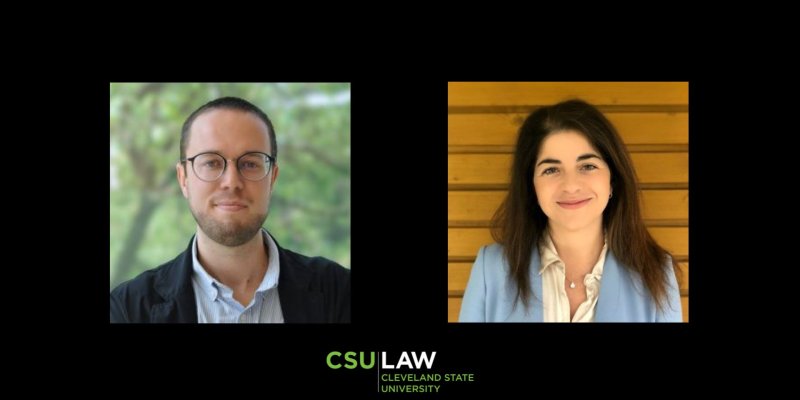
A new study co-authored by Cleveland State University College of Law Assistant Professor Lorenzo Luisetto, Visiting Scholar Guilia Guisy Cusenza, and several others examines the effectiveness of alternative pathways into the legal profession; an increasingly relevant topic as states explore options beyond traditional legal education models. 
 
The research examines historical data across multiple decades to evaluate outcomes for individuals who enter the profession through non-traditional routes, such as attending non-ABA-accredited law schools or completing supervised legal study in lieu of a formal degree from an ABA-approved institution. 
 
While alternative pathways have existed in nearly all states at some point, the study indicates that individuals pursuing these routes experience significantly lower bar passage rates compared to graduates of ABA-accredited law schools. The data also suggests that attorneys with alternative legal training experience have more limited career outcomes and may raise concerns about public protection, prompting questions about the effectiveness and oversight of these pathways. 
 
The findings come at a time of active discussion on attorney licensing, including the Ohio Supreme Court's evaluation of law school accreditation models. 
Category tags
Faculty
Recent News + Events
Oct 12 - 5:00pm
CSU Law

AI & the Attorney-Client Privilege: A Dawn of a New Era?

In recent months, as courts wrestle with the new realities of use (and misuse) of AI in legal proceedings, a new claim began to emerge: The informa
Sep 24 - 4:30pm
CSU College of Law

Documentary Screening Event - Baby Doe

CSU Law's Center for Health Law and Policy presents a screening of the documentary, Baby Doe, which tells the story of Gail Ritchey, a young
Sep 17 - 6:00pm
CSU College of Law

The Establishment and the Establishment Clause: The Future of Religion in American Public Square

2026 Constitution Day LectureFollowing the US Supreme Court’s decision Kennedy v.

Crain’s Cleveland Notable Leaders in Accounting, Consulting, and Law 2026

Seven of the 22 lawyers and 34 total leaders on this year’s Crain’s Cleveland Notable Leaders in Accounting, Consulting, and Law are grad